

By Phoebe Rettberg
It’s been over a year since I first watched Ever After(1998). Since then, I haven’t felt the need to rewatch it, and I don’t think I ever will. I don’t remember much of the plot (DaVinci is in it?), but I do think about the film constantly. Not the whole film. Not even a specific scene really. What has stuck with me most is a petty gripe I have with a blurry painting in the background of the scene where Anjelica Huston gets her comeuppance.
In this scene, on the wall behind the evil stepmother and stepsisters is the unmistakable vibrant red, blue, and stark white of Madonna Surrounded by Seraphim and Cherubimby Jean Fouquet. While it’s only shown briefly, the distinctive colors immediately caught my eye. It was only after several attempts of pausing at the right frame that I noticed something was different… They painted over her boob!

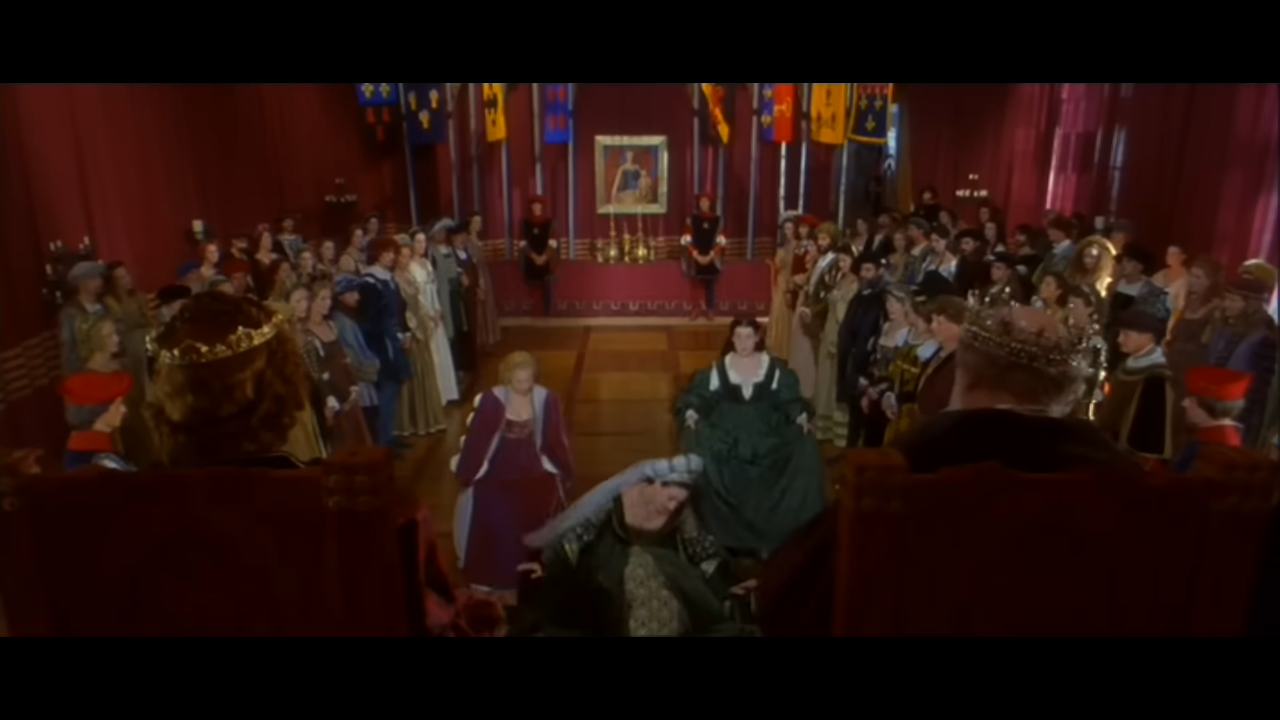

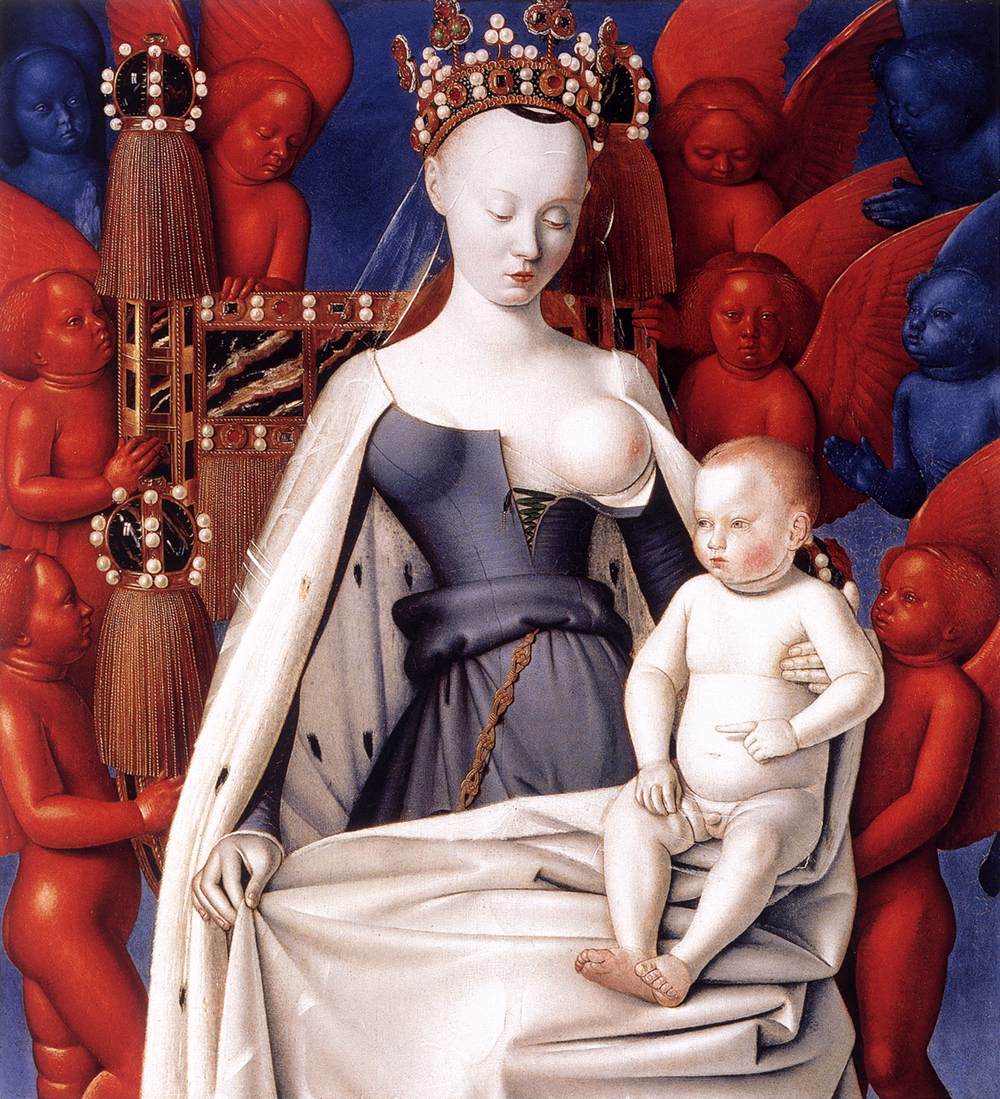
Why this act of heinous censorship has stuck with me requires a bit of context.
This surreal depiction of the Virgin Mary from the 1450s is understood to be modeled after
Agnès Sorel (1422-1450). Sorel was the first mistress of the king to be widely recognized as having an actual political role. In exchange for her relationship with the king, she was given an estate, wealth, and influence over his political decisions. The openness of their affair and her subsequent power made her a controversial figure in the French court. On top of that, she was known for popularizing low cut bodices that she often wore loosely tied—something which caught the ire of the archbishop, among others. Recent urban legends even tout that she intentionally exposed one boob all of the time while in court, an idea that probably stems from this painting. Honestly, she should have been a perfect figure for the 90s girl power feminism that Ever After champions.
This surreal depiction of the Virgin Mary from the 1450s is understood to be modeled after
Agnès Sorel (1422-1450). Sorel was the first mistress of the king to be widely recognized as having an actual political role. In exchange for her relationship with the king, she was given an estate, wealth, and influence over his political decisions. The openness of their affair and her subsequent power made her a controversial figure in the French court. On top of that, she was known for popularizing low cut bodices that she often wore loosely tied—something which caught the ire of the archbishop, among others. Recent urban legends even tout that she intentionally exposed one boob all of the time while in court, an idea that probably stems from this painting. Honestly, she should have been a perfect figure for the 90s girl power feminism that Ever After champions.
Shortly after her death during childbirth, Jean Fouquet painted Madonna Surrounded by
Seraphim and Cherubim. While it’s common to see paintings of Mary breastfeeding, this one is unique as she is not actively feeding Jesus, though her breast is still exposed. Given the scandal she caused in life, the use of her likeness in this painting meant to depict a symbol of virtue was incredibly controversial—and her open shirt was a reminder to critics of her supposed impurity.
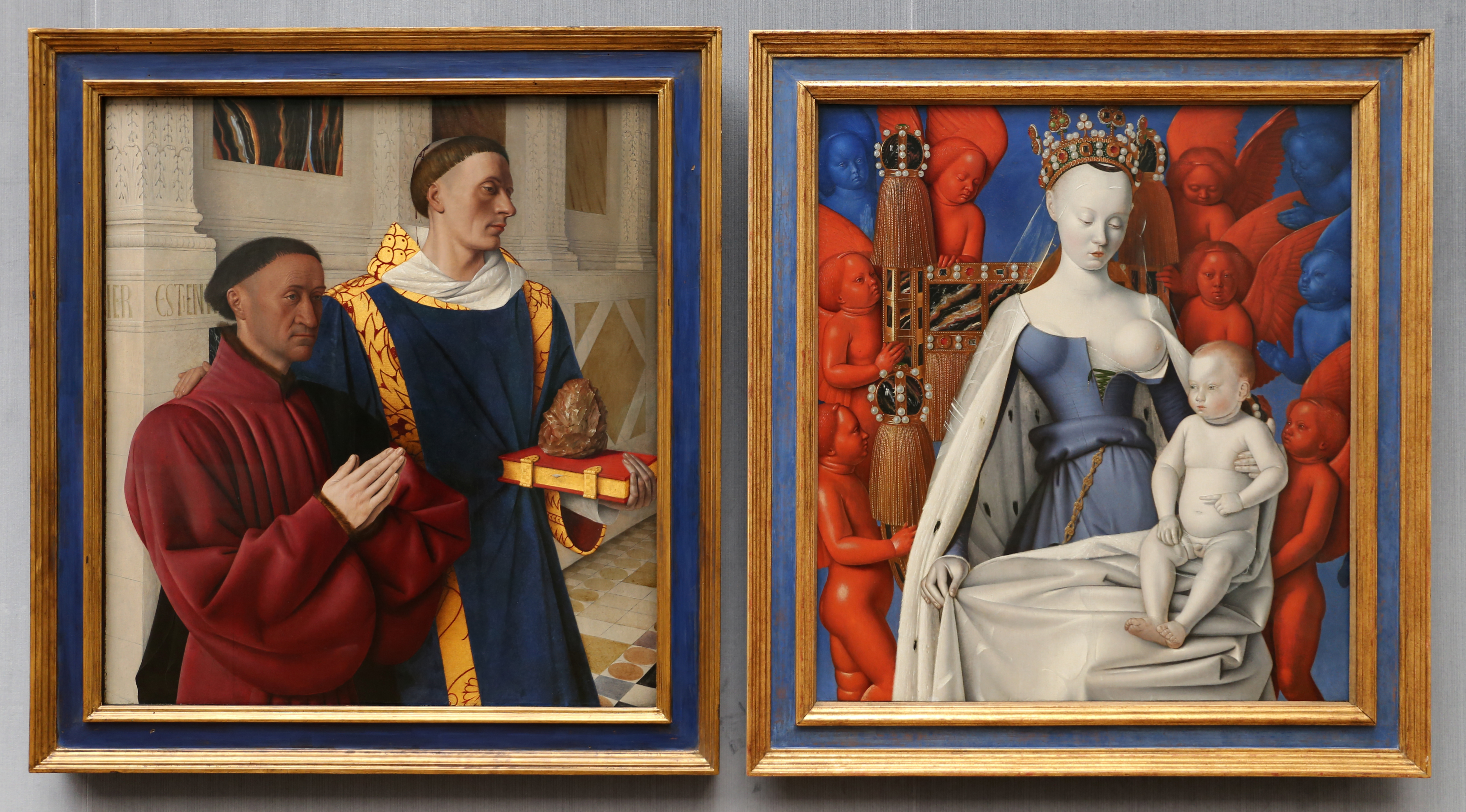
You can see, then, that it’s bizarre that a movie so purportedly concerned with both feminism and art history (re: DaVinci’s in this?) would include and alter this painting. They could have chosen any other painting from the era, yet they took the extra step of censoring this one. What adds to the absurdity of this choice is that Madonna Surrounded by Seraphim and Cherubim is only the right panel of the Melun Diptych, the second panel of which is absent from the film. While the film is incredibly lenient with its historical accuracy (everyone speaking in a British accent is a prime example), I find that the extra mile they went in censoring this painting—inadvertently joining in a centuries-old tradition of slut shaming Sorel—totally strange.

Leave a Reply Cancel reply