
Written by Ashley Watrin
BEATLEMANIA: The Blueprint for the Modern-Day Fangirl by Ashley Watrin
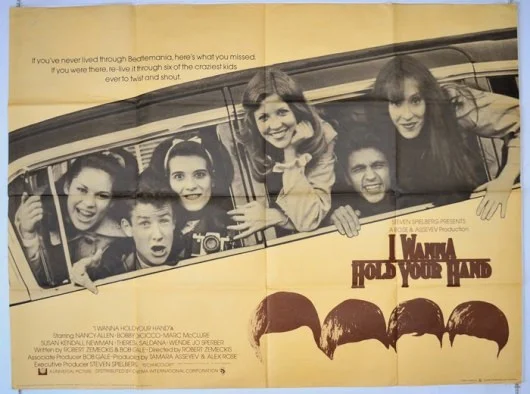
Film pictured: I Wanna Hold Your Hand (1978)
It’s time we gave fangirls the credit they deserve. Our society often overlooks how a fangirl’s devotion and enthusiasm has such a massive impact on an artist’s legacy all because we aren’t men. This doesn’t mean our love for a musical artist makes us any less of a fan or a person.
By delving into Beatlemania, we examine the continued lack of proper credit toward the fangirls for the success of their favorite artist’s career and legacy. No matter how prominent the band, the lack of credit for fangirls exemplifies society’s persistent disownment due to gender identity. One would simply gloss over how the Beatles fangirls were a major contributor to the band’s rapid rise to become the defining act of the 60s whilst, ultimately, becoming the blueprint for the fan culture we see today.
Of course, before the Beatles, there were already music artists with notable fan bases. During the performances of nineteenth-century Hungarian composer, Franz Liszt, his fans created such a massive frenzy that the term, “Lisztomania” was invented to describe their reactions. Other popular twentieth-century artists, such as Frank Sinatra and Elvis Presley, saw similar reactions from their fans. Elvis is one I can personally vouch for, since my grandma was dead set on trying to see him as much as she possibly could.
Following the suit of my grandma, I do have some fangirl credibility myself which does include The Beatles. However, it started with my childhood love of the Jonas Brothers, then Big Time Rush, Five Seconds of Summer, and then the many KPOP groups I used to stan in middle school. Most importantly, the biggest one (and probably most similar to The Beatles fangirls) was One Direction. Yet, all of these twenty-first century fangirl experiences would not be possible if it wasn’t for the Beatles fangirls.
In the early 60s, the clear majority of Beatles fans started out with teenage girls. While figuring out their place in society between childhood and adulthood, teenage girls from around the world found a space for themselves within music. They were drawn to The Beatles’ catchy, upbeat rock ’n’ roll sound. Then, by pairing these beats seamlessly with swooning, romantic lyrics, the fans could not help but burst and beam with much notable enthusiasm during the live performances.
Having The Beatles members themselves create these beats and write such words was something uncommon for pop acts during the early 60s. Furthermore, the connection to the band became even more irresistible to the fans. Additionally, thanks to The Beatles’ manager, Brian Epstein, the boys wore matching suits and acquired “mop top” hairstyles which made their image appeal softer and rather more attractive to the girls.
So, you put all of this together, and you have Beatlemania in full effect as this massive cultural phenomenon of the 60s. Due to this global spread, The Beatles were eventually propelled onto major stages. They played sold-out gigs at baseball stadiums, drew millions of viewers for TV performances, and even made movies promoting their albums — starring The Beatles, of course. Not to mention, so many girls rushed to record stores and drove up sales for a chance to purchase their own copy to listen to as many times as their hearts’ desired.
The influence garnered by the devotion of their fans did not stop there. Soon, Beatles merchandise was everywhere, unlike anything we had seen with artists beforehand. Bedrooms became plastered with posters as dolls and magazines sat on nightstands. In school, girls came with Beatle badges on their dresses and Beatle lunchboxes in their hands. And there were so many Beatle-themed items that if I named them all I might run out of space on this page. But, it was anything you could ever imagine.
Beyond merchandise, we saw Beatlemania’s influence on fan culture itself. Soon, we saw how the shared love for The Beatles united teenage girls together all over. Fanclubs were established, committees came together to make newsletters, all-girl rock bands started popping up, and new friendships at school were forming all thanks to these four musicians from Liverpool. Additionally, these girls were really our Beatle historians. Their diaries and newsletter columns give us such precise descriptions of their concerts, outfits, their mood, etc. If you ever read the book, “I’m with the band” by one of the most famous rock-n-roll groupies ever, Pamela Des Barres, Miss P provides evidence of self-insert fan-fictions created around The Beatles in the 60s, — you know, like our modern day y/n from Wattpad and AO3. Even in fan fiction, modern-day fans do echo the Beatles fangirls of the 60s. We are more alike than we know.
Without the fangirls’ wholehearted love and enthusiasm, The Beatles would not have been remarked as such a massive cultural phenomenon forever linked to the 60s. Would they even have a rise to popularity on such a major scale without the fangirls? The fangirls have long been overlooked by society’s determined misogyny to make women out as too emotional and hysterical for something they were deeply passionate about. The fangirls simply got to enjoy a band that brought enough excitement to drown patriarchal expectations out and gave them a chance to rebel against the societal expectations of repression toward their sexuality. Their iconic reactions even contributed to the liberating and free-spirited characteristics that defined the legacy of the sixties.
So why must we disregard and belittle the fangirls of the 60s and even the fangirls of today’s time? Without a doubt, today’s music industry, artists’ interactions with fans, pop culture, and fandom spaces would not be what they are without The Beatle fangirls. They truly were the blueprint and deserve more acknowledgment for helping shape their beloved artist’s legacy. And likewise, do the fangirls of today’s time deserve as well.
See the article made into a YouTube video as a final project for a class: https://youtu.be/GCGe6o3o7gc?si=2RvTh_YN-C2NyD00
—
Research:
https://www.museumofyouthculture.com/…
https://www.theguardian.com/music/202…
https://beatinpaths.com/2022/01/05/th…
Book – I’m with the Band by Pamela Des Barres
Film – I Wanna Hold Your Hand (1978) directed by Robert Zemeckis
Leave a Reply Cancel reply