by Annette Mathew
As someone blessed with a menstruation cycle, I have never found the bloody mess that is my monthly bodily clean-up, attractive, pleasing, or sexy. However, I’ve noticed in films and media how women’s bodies in coming-of-age have become a vessel of sexuality, whether it portrays an awakening or a journey towards womanhood. This sensational transition provides direct opposition to the limits of growth in women placed by society; it’s frightening and it’s carnal. During these cycles, women are no longer fragile beings, incapable of handling heavy circumstances. Somehow, we grow desensitized to the sight and feel of blood, but we are encouraged to swallow our pain and endure.
Why is it that the feminine body is consistently ravaged, destroyed, and ruined while simultaneously constrained within a standard of delicacy and fragility? I always wondered why it was so hard for me to watch films containing gore and intense blood usage. I realize now it may be due to the fact that sometimes, these scenes feel way too real. Have I unconsciously grown familiar with the sight of blood because of my experience growing up as a girl? Sweetpea explores this phenomenon through a subversive lens; instead of bearing shame surrounding our suffering, taking back power through blood and violence might just be how we combat patriarchy.
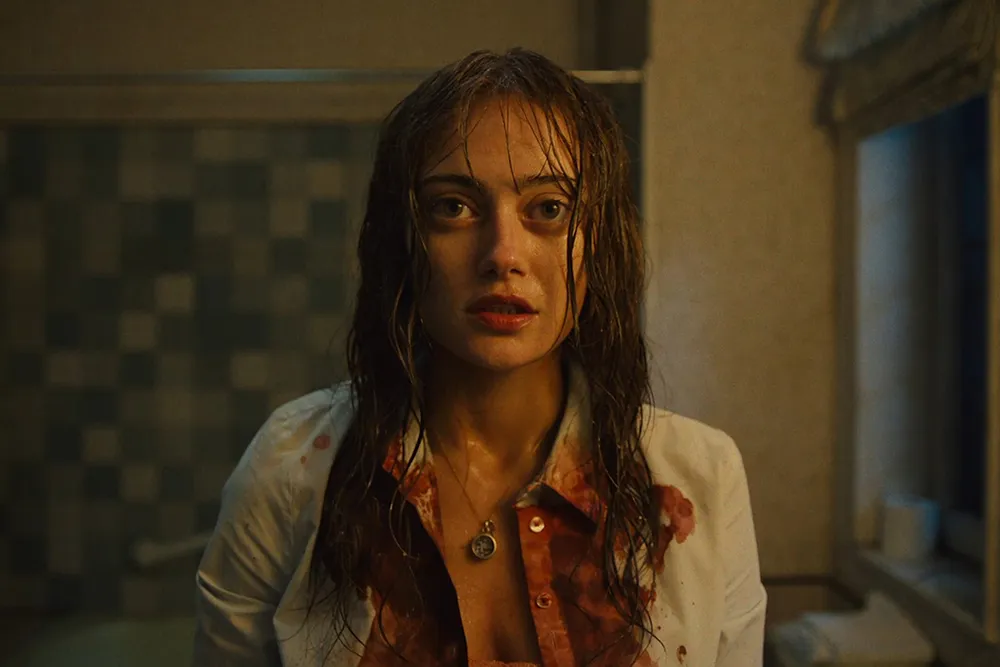
In the 2024 British series, the main character, Rhiannon, transcending her veil of invisibility, makes herself known and seen through violence as a culmination of her frustration at the ignorance from those surrounding her. Rhiannon not only accepts the pain she faces as a woman, as a shadow and as an integral part of the female experience, but she also takes pride in it, going as far as to inflict pain and misery on others for her own revenge. Sweetpea uncovers the spectrum that is female suffering, through victimhood and how women choose to respond to it. Rhiannon is someone who terrible things happen to, driving her to take part in other terrible acts as a result of her life spiraling out of control.
Something that really struck me while finishing season one of the series was how Rhiannon really gets off to killing men. Rhiannon’s nemesis is her school bully and polar opposite, another girl who meets a seemingly-happy ending despite her borderline-sadistic behavior towards Rhiannon. Nonetheless, there’s literally a scene where Rhiannon is mid-sex with her himbo boyfriend in her new, alpha-dominatrix mommy form and she dissociates, picturing a previous murder that she’s committed: a brutal stabbing of a random man who pissed her off. That image is what really arouses her, not the physical sex, and not the fact that she’s been interested in this guy for a while and he’s finally started to really see her. Her desires aren’t rooted in intimacy but in the catharsis that violence offers her– a twisted reclamation of control in a world that refuses to acknowledge her.
Leave a Reply