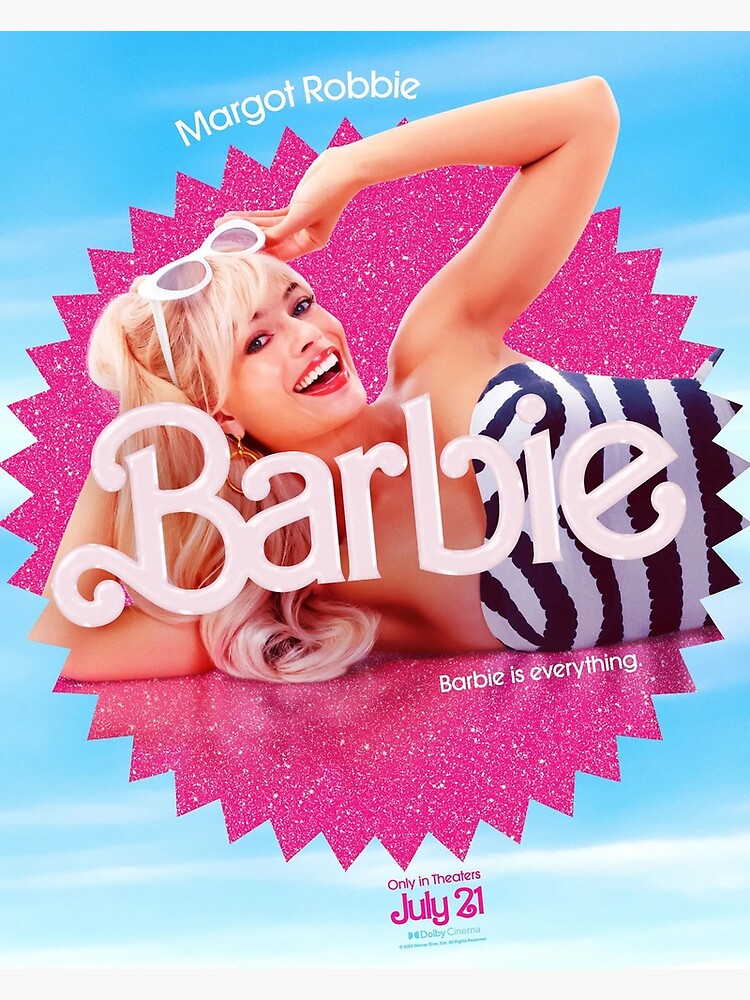
by Avella Degennaro
The first scene of Greta Gerwig’s 2023 live-action Barbie movie is a spoof of Stanley
Kubrick’s 2001: A Space Odyssey. In a primordial desert inhabited by a few girls caring
halfheartedly for their baby dolls, a towering swimsuit-clad Margot Robbie appears out of thin air. Playing mother “can be fun… at least for a while, anyway,” the narrator says before Barbie’s dramatic appearance.
Greta Gerwig presents Barbie as the women’s version of the evolution-stimulating
monolith in Stanley Kubrick’s classic film. Her argument essentially seems to be that the Barbie doll opened up a new world for girls – and women, by extension – that emphasized
independence and empowerment over a submissive maternal role.
While there is probably some truth to this narrative, the Barbie phenomenon is nowhere
near this simple, and Gerwig knows it. The hyperbole of the 2001: A Space Odyssey comparison makes the opening scene comedic, but it also makes it impossible to take seriously. Indeed, the narrator soon hints at this: “Thanks to Barbie, all problems of feminism and equal rights have been solved. At least, that’s what the Barbies think.” The movie’s central conflict develops when Barbie learns that Barbieland has not “solved” sexism in the real world. She instead discovers a world in which “everything’s almost like… reversed.” Gerwig isn’t trying to say that Barbie has solved everything.
But what is she trying to say?
Gerwig and her co-writer Noah Baumbach were faced with a difficult task: they couldn’t
cast Mattel in an evil light, but they couldn’t ignore Barbie’s problems. They chose to tackle the issue of feminism, yet they had to appeal to, and entertain, a wide range of viewers. Considered in this context, the team pulled off an impressive feat. They certainly satisfied scores of viewers, reaped huge financial gains for Mattel, and snagged approval from the most prominent critic and award circles. However, I argue that the only reason they were able to attain this success is that they avoided making a definitive statement about anything.
Let’s take the 2001: A Space Odyssey narrative as an example. Immediately after the
narrator hails the sexy, blonde, “stereotypical Barbie” as the savior of the (mainly American) female, she points out that while Barbie started out this way, she has become “so much more.”
“Because Barbie can be anything, women can be anything,” she says as the camera pans through an array of mixed-race, body type, and profession Barbies. But later, when Barbie meets Sasha, the girl who used to play with her, Sasha accuses her of being the epitome of what is wrong with American society – perpetuating restrictive beauty standards, glorifying capitalism, etc. This proves that though Mattel may have come a long way, they have in no way erased the image and connotation of the original Barbie in the collective consciousness. Sasha eventually warms up to Barbie when Barbie leads the fight to save Ken-dominated Barbieland, but this doesn’t solve any of the problems Sasha has pointed out.
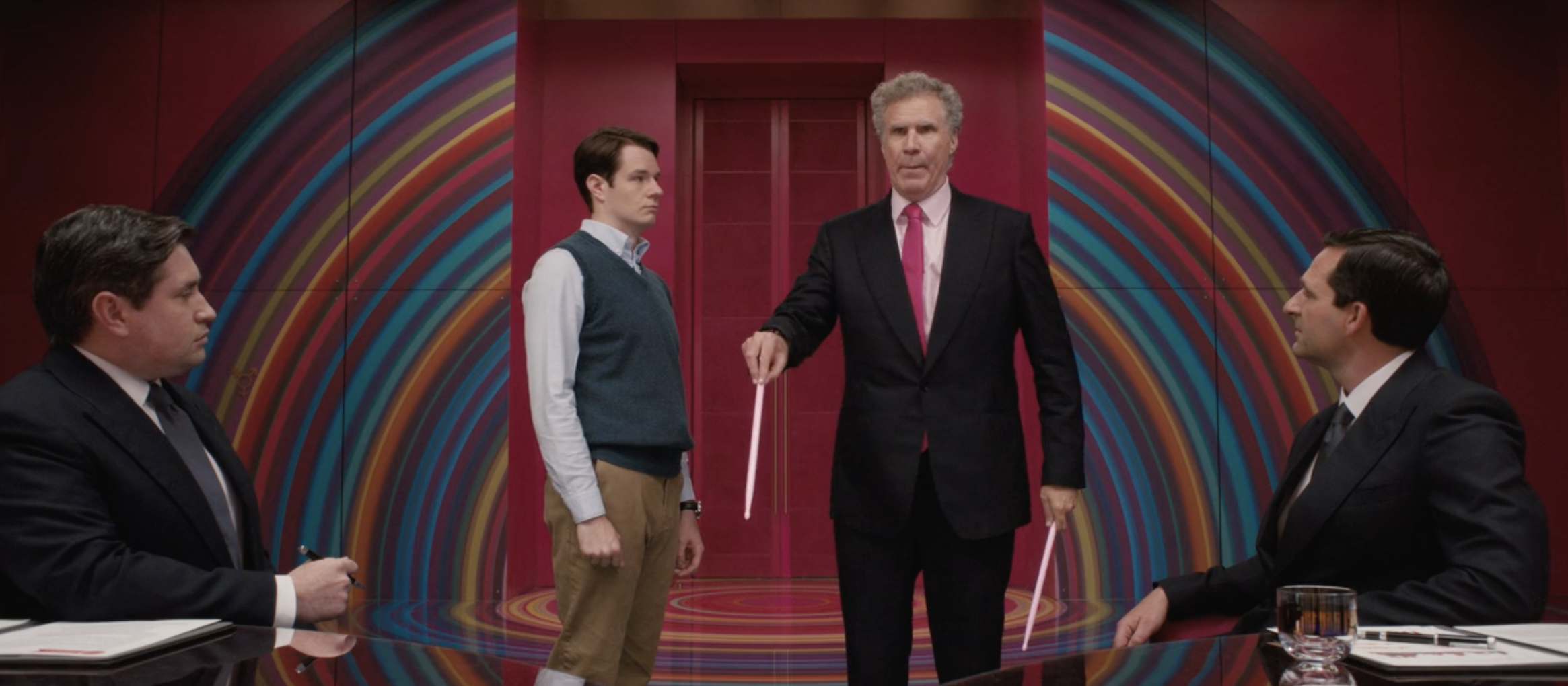
In fact, many problems go unaddressed in this movie. When Barbie asks where the female Mattel executives are, the Will Ferrel character just flounders through lame and nonsensical excuses (“I’m the son of a mother! I’m the mother of a son!”). Even the Barbies’ reclamation of Barbieland is accomplished through shallow and cruel means, and results in the same unequal society they started out with. “One day, the Kens will have as much power and influence in Barbieland as women have in the real world,” the narrator
says. Why stop at the unequal power dynamic of the “real world”? Why not aim for a society of equality?
At the end of the day, Barbie is a charichatured movie that loses itself in plastic slides, fur
coats, and chase scenes. Award shows don’t necessarily provide an accurate reflection of
cinematic merit, but I think it’s worth noting that Barbie is nominated for an Oscar in set design, not directing. Gerwig and Baumbach succeeded at producing an entertaining blockbuster film, but what surprises and worries me is that so many (leftist, Gen Z) people ignored its context as a Mattel advertisement for a historically problematic product and hailed it as a feminist success.
Leave a Reply