By Nora Ligotti
Sex on screen can look many ways: sometimes, clever shots and editing create a modest,
romantic suggestion of the act; other times, it is depicted much more explicitly, foraying into the pornographic. In almost every case, though, sexual intimacy is limited to the physical, and ignores an arguably more profound type of intimacy: talk. Not like “dirty” talk or flirting, but real talk– laying your desires, passion, and shame bare, before you ever begin to uncover your body. This talk is scarce in mainstream (particularly cis/hetero-normative) American media and sex culture– or at the very least, it usually only exists in conjunction with physical, “real” intimacy. But talk can be sex, and Steven Soderbergh’s breakout film sex, lies, and videotape (1989) showcases the power of such conversation to liberate the sexual self.
romantic suggestion of the act; other times, it is depicted much more explicitly, foraying into the pornographic. In almost every case, though, sexual intimacy is limited to the physical, and ignores an arguably more profound type of intimacy: talk. Not like “dirty” talk or flirting, but real talk– laying your desires, passion, and shame bare, before you ever begin to uncover your body. This talk is scarce in mainstream (particularly cis/hetero-normative) American media and sex culture– or at the very least, it usually only exists in conjunction with physical, “real” intimacy. But talk can be sex, and Steven Soderbergh’s breakout film sex, lies, and videotape (1989) showcases the power of such conversation to liberate the sexual self.
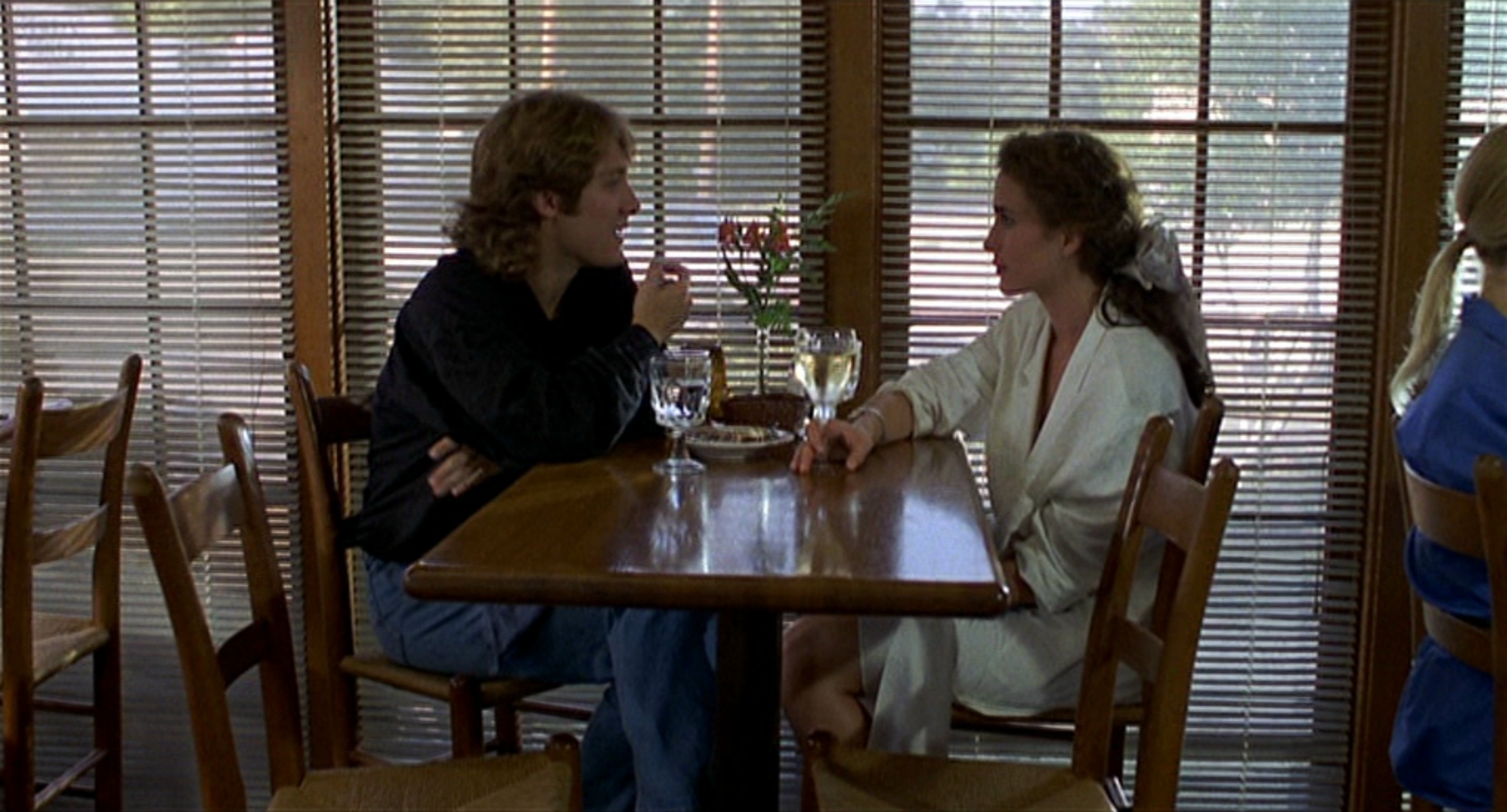
In sex, lies, and videotape (herein referred to as SLV), Ann (Andie MacDowell) is an anxious, sexually repressed young housewife married to inattentive lawyer John (Peter Gallagher). Graham (James Spader), John’s college friend, comes to town, and quickly disrupts their fragile equilibrium. As she gets to know this mysterious, awkward stranger, Ann is fascinated by Graham’s forthrightness. Within a day of meeting her, Graham divulges parts of his harrowing romantic past, revealing that, as a result, “for all practical purposes, [he’s] impotent.” Ann further discovers that, in the absence of physical intimacy, he finds his pleasure in (consensually) taping women while they talk to him about their lives and sexual experiences. For Graham, talk is sex. The psychological nature of Graham’s condition and his openness on the topic is refreshing in its subversion of stigma around male impotence. His reliance on non-physical intimacy, honesty about his voyeuristic fetish, and respect for his partners also humanizes “unusual” sex.
When Ann discovers John’s affair with her sister Cynthia (Laura San Giacomo), she
reaches a breaking point and convinces Graham to tape her speaking. She admits she’s never had an orgasm, and the two speak frankly about their growing desire for one another. Through talk, Ann finds freedom from her unhappy marriage and her sexual repression, and as she slowly turns the camera to Graham for the first time, he finds closure on his past. The conversation is a narrative and literal climax, as Ann shuts off the camera and they have sex in a scene that, intentionally I think, the audience never sees. Though the resolution of their respective psychological and sexual journeys is physical, the satisfaction of the moment is in the emotional catharsis of their mutual truth-telling and self-(re)discovery.
SLV is revolutionary in many ways: it changed the face of the indie film industry forever and launched Steven Soderbergh’s iconic career, for starters; but for me, this earnest film is most special for flipping the script on sex and harnessing the sensual power of talk to comment on sexual repression of women, humanize taboo topics surrounding sexuality and impotence, and highlight the liberatory potential of honest conversation.
Leave a Reply