by
The death-game genre has long been a compelling staple of fantasy media, offering a contrast to its real-life reality counterparts like Survivor by incorporating the ultimate stakes: death. In these narratives, participants are coerced or forced to gamble their lives in pursuit of wealth, power, or survival. The gladiator-style tournaments, where protagonists endure brutal, game-like challenges for the entertainment of the upper class, serve as a powerful trope to critique systemic oppression and hierarchical structures. This theme is vividly explored in iconic works such as The Hunger Games franchise, Alice in Borderland, and the globally-acclaimed Squid Game. These stories highlight the plight of the lower class, who are exploited as pawns in a deadly spectacle designed to amuse the wealthy elite. Squid Game, in particular, resonated deeply with audiences due to its sharp critique of societal inequality and the lengths to which individuals are driven by economic desperation. Its emotional depth and social commentary struck a chord, making it a cultural phenomenon.
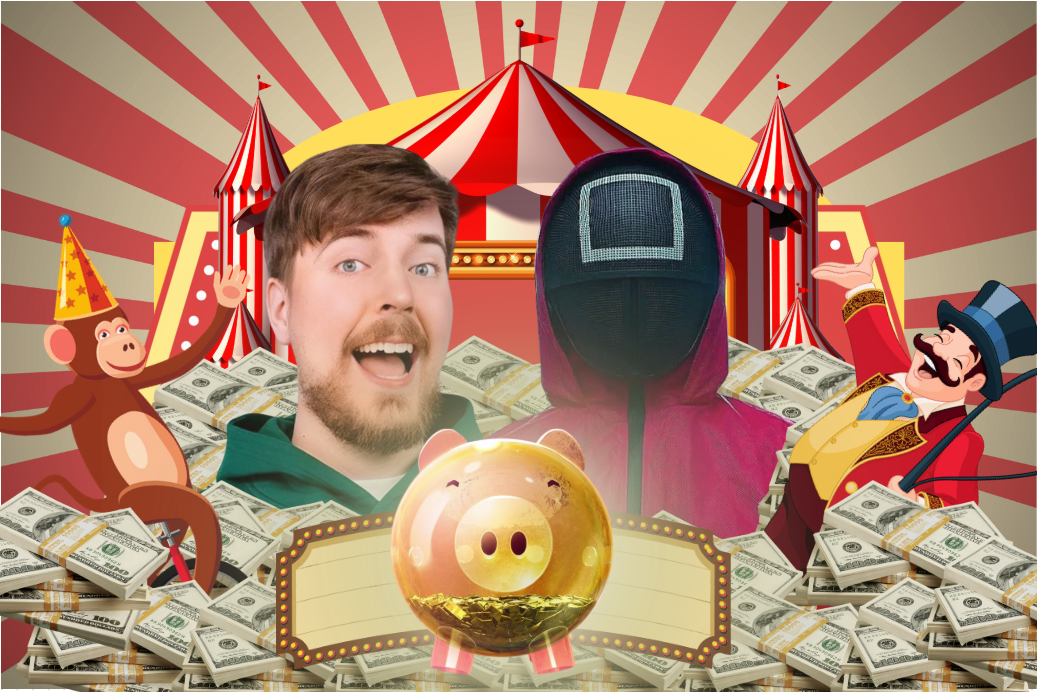
However, the recent emergence of Netflix’s Squid Game: The Challenge and Amazon Prime’s Mr. Beast Games marks an alarming departure from the genre’s critical roots. These reality adaptations follow Squid Game’s format through their usage of masked authority figures, matching jumpsuits that strip away player’s individuality, and childhood games being the obstacles that the players must overcome. This strips away the original’s critique of capitalism and inequality. We have completely lost the plot. These production’s glorification of the very dystopian narrative they mimic transforms a cautionary tale of capitalism into yet another form of tone-deaf exploitative entertainment. By replicating the format of the show without the well-written plot, these shows risk normalizing the oppressive systems they once sought to condemn, ultimately undermining the genre’s purpose and reducing its powerful message to a simple spectacle. This shift raises important questions about the ethics of entertainment and the potential consequences of blurring the lines between fiction and reality. As consumers capable
of critique analysis we must remember that playing stupid games only wins us stupid prizes.
-With my chest, JC Toringan
Leave a Reply